Bibliography

Art Journalism & Criticism

William Kent: The Sphinx of Durham by Peter Hastings Falk,
Discoveries in American Art, 2012

“Honesty Is the Best Poverty: The Second Life of William Kent” by Alan Bisbort, Please Kill Me, 2013

The Crucifixion of Kent: Life and Work of an American Sculptor, Part One by Matthew Spellberg, Music & Literature, 2015

The Crucifixion of Kent: Life and Work of an American Sculptor, Part Two by Matthew Spellberg, Music & Literature, 2015

“How Else Could You Get Out: William Kent and the Zipper” by Matthew Spellberg, The Brooklyn Rail, 2026

Selected Periodicals

The New York Times (Oct. 4, 1998) “Sculptor in Search Of Discerning Eyes” by Richard Weizel

The New York Times (Sept. 3, 2000): “How Prints Got an Artist in Hot Water” by Alan Bisbort

Durham Patch (Aug. 29, 2012): “Local Sculptor Gone, But His Work Won’t Soon Be Forgotten” by Michael Hayes

CT Insider (Nov. 3, 2012): “Durham’s Hidden Treasure: The Works of a Prickly Master Wood Carver” by Randall Beach

Durham Patch (Jan. 6, 2013) “Durham Artist’s Legacy Lives On” by Michael Hayes

The Hartford Courant (Oct. 12, 2024): “Radical Work of Late Connecticut Artist William Kent Continues to Make Grand Social Statements” by Chris Arnott

The Brooklyn Rail (March, 2026): “William Kent: Trust The Peeple!” [Ricco/Maresca Gallery exhibition review] by Ekin Erkan

Publications

Pop Art (1966) - Lucy R. Lippard w/ Lawrence Alloway, Nancy Marmer & Nicolas Calas

  • A key critical survey of the Pop Art movement, which cites Kent’s strongly satirical stance in his prints as a distinguishing feature among prevalent Pop sensibilities and approaches.

The Art of the Print: Masterpieces, History, Techniques (1976) — Fritz Eichenberg

  • Details Kent’s unique slate monoprint technique in his own words.

Nature Transformed: Wood Art from the Bohlen Collection (2004)

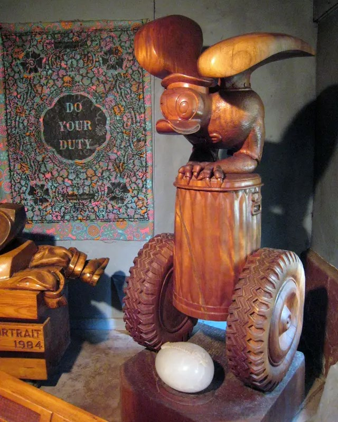
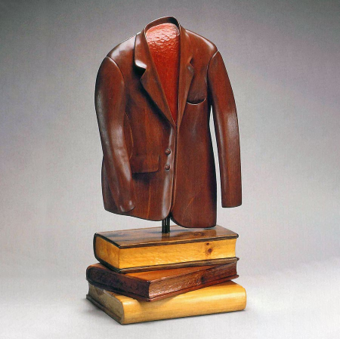
  • Illustrates several excellent late-career examples of Kent’s carved wood sculpture.

Archival Collections & Research Resources

William Kent (1919-2012) Papers, Archives of American Art, Smithsonian Institution

  • Over 10 linear feet of materials: correspondence, interviews,
    photographs, exhibition files, scrapbooks, and writings.